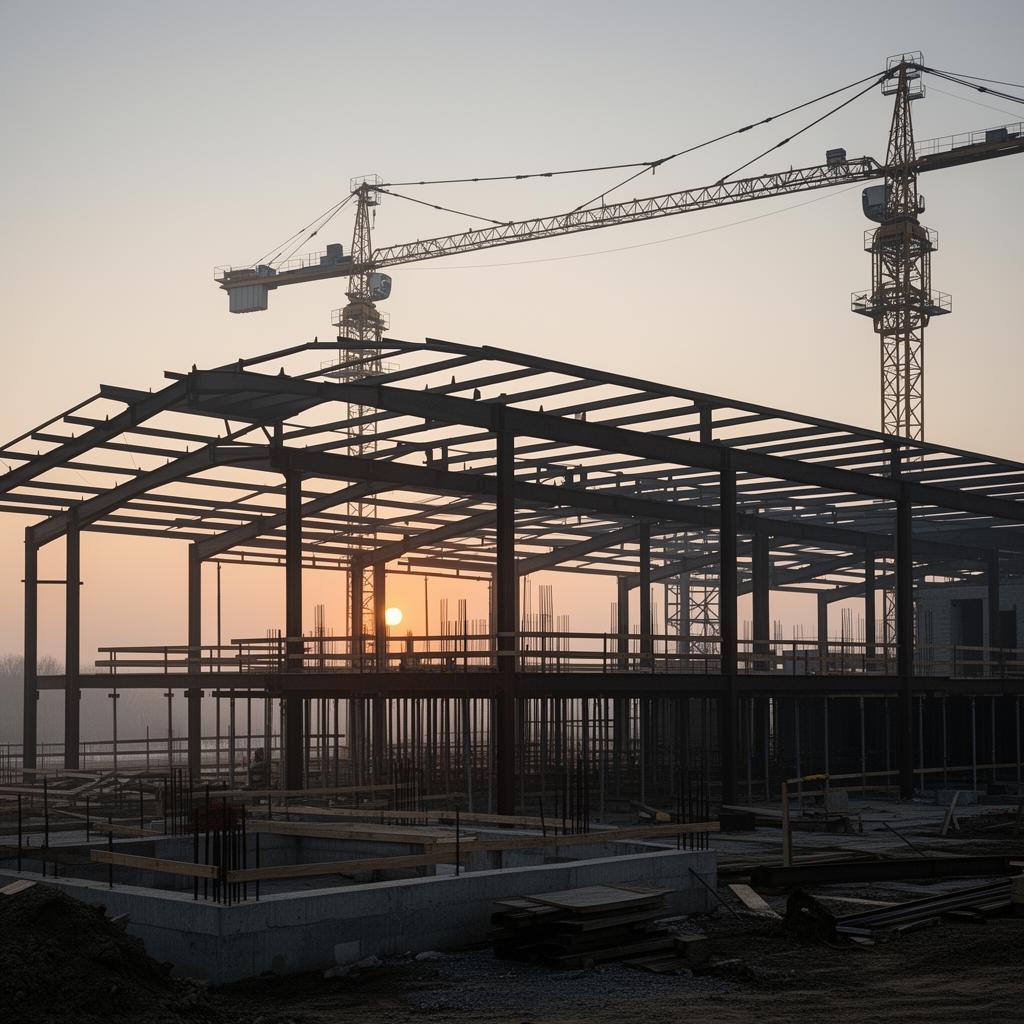
The construction industry doesn't lack forecasts. What it lacks is translation — the ability to turn outlooks, reports, and trends into operational decisions that actually change how companies work.
The Associated General Contractors of America recently published its 2026 Construction Industry Outlook, outlining what many contractors already feel in their day-to-day operations: uneven demand, persistent labor shortages, rising costs, and increasing complexity across projects.
The report is accurate. But the real question is: what does it mean for how construction companies need to operate now?
The Headline Isn't Slowdown — It's Imbalance
The 2026 outlook doesn't describe a collapsing industry. It describes an uneven one.
Some sectors — data centers, infrastructure, power, specialty facilities — are accelerating. Others are cautious. Financing is tighter. Owners are more selective. Margins are under pressure.
This creates a different kind of risk: not whether work exists, but whether organizations can handle complexity without burning out their people or losing control.
In this environment, growth without structure becomes a liability.
Labor Shortages Aren't Just a Hiring Problem
The outlook reinforces what many firms already know: workforce challenges aren't going away.
But the deeper issue isn't headcount alone. It's how much critical knowledge lives in people instead of systems.
When labor is scarce, onboarding takes longer. Mistakes cost more. Tribal knowledge becomes a single point of failure.
Modernization, in this context, isn't about replacing people with technology. It's about making experience visible, transferable, and supportable — so teams can perform consistently even as personnel changes.
Technology Adoption Is Happening — Unevenly
The industry is clearly moving toward greater use of technology, automation, and data-driven tools. But most construction organizations don't struggle because they lack tools.
They struggle because tools don't align with how work actually flows. Systems aren't connected. Information is fragmented across emails, spreadsheets, whiteboards, and conversations.
The result is a familiar pattern: more software, but not more clarity.
True modernization isn't adding tech. It's integrating process, people, and information into something teams can actually see and use.
Cost Pressure Is Forcing a Shift in Thinking
With material costs, tariffs, and uncertainty still in play, many firms are more cautious about expansion. That caution is rational.
What's changing is where companies invest: fewer speculative hires, more focus on reducing friction, more emphasis on predictability and visibility.
In a tighter market, clarity becomes a competitive advantage.
Organizations that understand their workflows, constraints, and decision points are better positioned to price work accurately, sequence projects realistically, and protect margins without overloading leadership.
What This Means for Construction Leaders
The 2026 outlook points to a clear conclusion: the next phase of competitiveness in construction will not be won by scale alone — it will be won by operational maturity.
That maturity shows up as transparent workflows, reduced dependence on individual memory, systems that support people instead of replacing them, and phased modernization instead of disruptive overhauls.
This is especially critical for owner-led and specialty firms that have grown through experience, relationships, and grit — but now face limits in visibility and bandwidth.
Where Rynalty Group Fits
At Rynalty Group, we work with construction and field-based organizations to help them translate how work actually happens into systems that support growth, stability, and resilience.
Our approach isn't about forcing transformation. It's about observing real operations, clarifying what already works, making the invisible visible, and modernizing in phases that respect people and reality.
The 2026 outlook doesn't signal retreat. It signals a need to build smarter foundations for the next cycle.
Looking Ahead
Market conditions will continue to shift. Labor dynamics will evolve. Technology will keep advancing.
The organizations that thrive won't be the ones chasing every trend — they'll be the ones who can adapt without losing control.
That's the work of modernization.