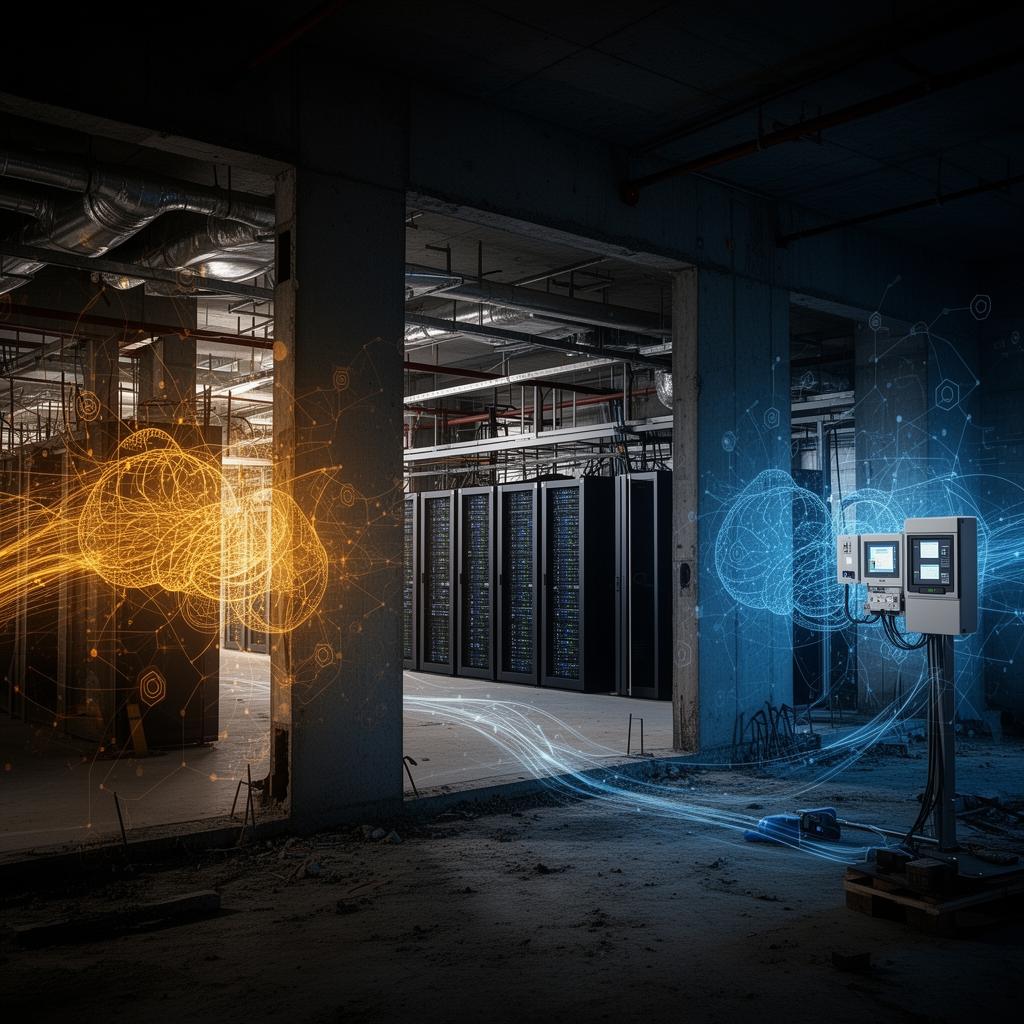
Why I Built This
I have spent years inside complex construction. Data centers. Mission critical facilities. High-stakes MEP and building automation work where the cost of a wrong sequence, a missed commitment, or a lost decision is not measured in hours. It is measured in hundreds of thousands of dollars and relationships that take years to rebuild.
Here is what I kept seeing.
Teams solve hard problems every single day. Sequencing conflicts. Coordination gaps. Field conditions nobody planned for. Equipment that shows up in the wrong order. Commissioning issues that trace back to an installation detail that got changed in week three of a six month project.
They solve them. And then the solution disappears.
It disappears into an email thread nobody can find. Into a meeting note that never got written. Into the head of a foreman who just moved to the next job. Into a closeout package that documents what was built but not what was learned building it.
And the next team shows up and pays for it again.
The Silent Cost
I have watched trade contractors, talented, experienced, winning firms, absorb that cost silently on every project. Change order disputes where the work happened but the documentation trail was thin. Commissioning delays because a field deviation never got recorded. Rework on level seven because nobody captured what level three already figured out. Closeouts that dragged for weeks because nobody could answer a simple question with confidence.
This is not a people problem. These are excellent people. This is a systems problem. The industry was never designed to capture what it learns.
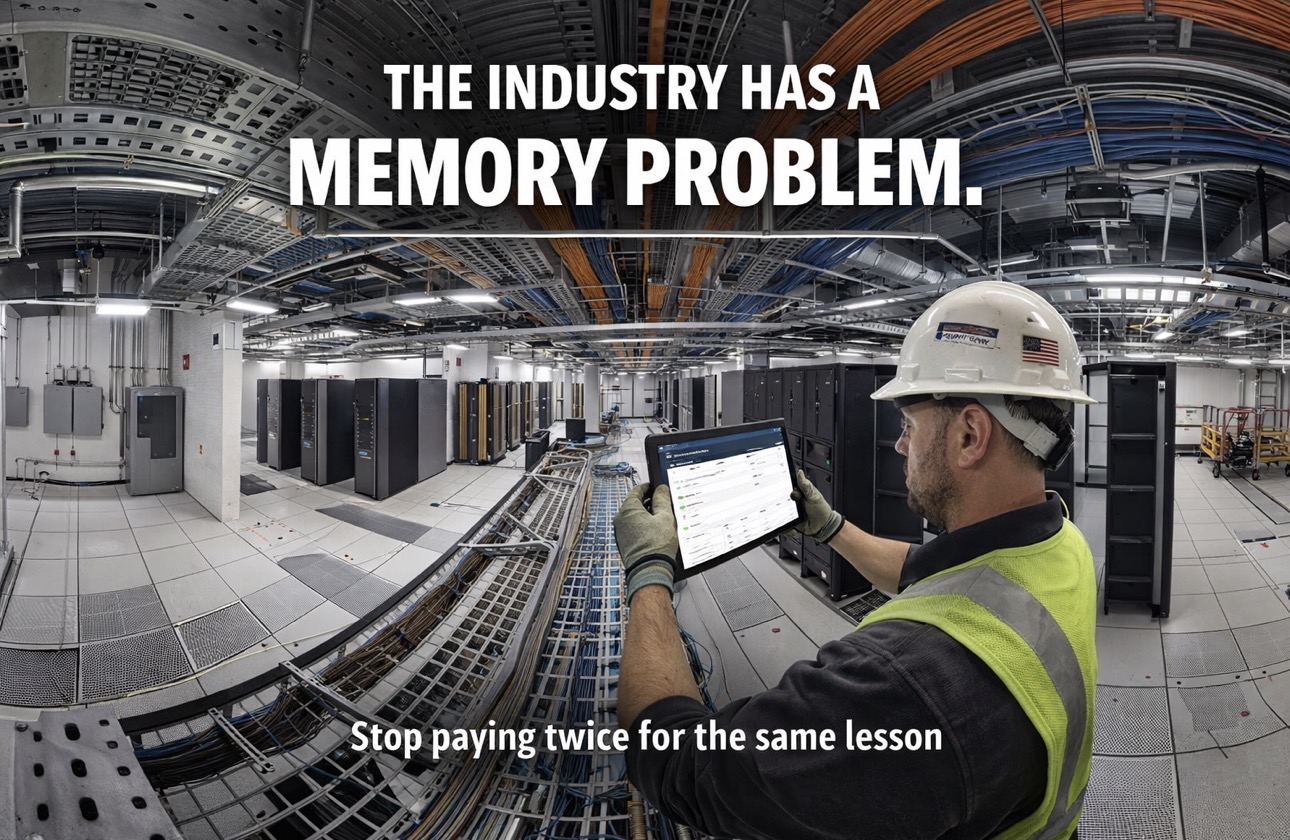
That is what Groundline was built to solve.
Not another dashboard. Not another reporting layer on top of tools nobody fully uses.
Groundline is an operational memory system built specifically for the trade contractor, the firm that carries the most execution risk on complex facility projects and historically gets the least infrastructure support to manage it.
What This Looks Like in Practice
A building automation contractor installing owner-furnished sensors and devices across five data hall phases. Twelve data channels flowing in: GC schedules, daily reports, meeting transcripts, commissioning records, OFE delivery status, field issues, procurement, estimates. All normalized into a single correlation engine that tracks not just what is happening but what it means across sources simultaneously.
Drift detected before the OAC meeting, not during it. Sequencing tracked end to end so materials and information arrive in the controlled order installation requires. Every meeting commitment extracted, assigned, and logged so 'I thought you said' becomes a resolvable question instead of a relationship problem. Every field issue captured with context, routed automatically, and resolved with a record that stays in the project memory permanently.
And at closeout: a defensible project record. Complete issue resolution history. Equipment lifecycle from expected delivery to commissioned and tested. A knowledge base that carries resolution patterns from this project into the next one.
When a PM leaves, the memory stays.
That last sentence is the one the industry has never been able to say before.
The Market Reality Nobody Is Talking About
Trade contractors in data center and mission critical construction are being asked to perform at a level of operational complexity that their internal systems were never built to support. The projects scaled. The infrastructure did not.
The result is a hidden tax, paid in rework, disputes, closeout drag, commissioning delays, and institutional knowledge that walks out the door at the end of every job. Across the trade contracting market, that tax runs into billions of dollars annually. It is not visible on any balance sheet as a single line item. It is buried in labor variance, change order attrition, and project overruns that get absorbed and forgotten.
The firms that solve this first will not just protect margin. They will operate at a level of consistency and speed that their competitors cannot match without the same infrastructure. They will bring something to a GC or owner conversation that no estimate or schedule can demonstrate: a track record of structured execution with the record to prove it.
The Category Groundline Is Defining
Not project management. Not document control. Not a digital twin.
Operational memory for the built environment. Starting with the trade contractor. Extending through commissioning, turnover, and into the full life of the facility.
We are early. The product is live. The results are real. And the direction is clear.
If you are a trade contractor in data center, mission critical, or complex MEP work, and you recognize what I just described, I want to talk to you.
Not a demo. A conversation about what it would mean for your firm to stop losing what you already know.